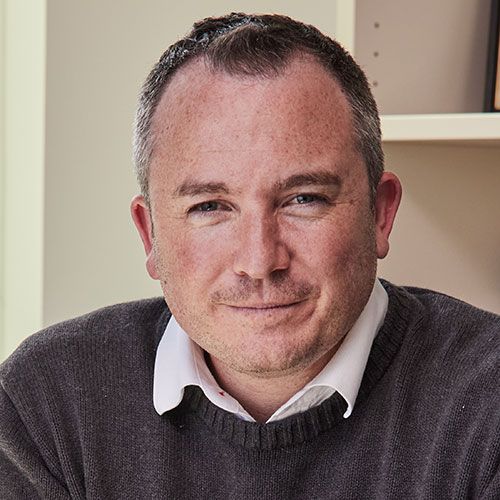
Group Leader
What we do
Cancer precision medicine is transforming care by tailoring treatment to the unique biology of each patient’s tumour. Our group develops computational and AI-driven approaches to extract clinically meaningful insights from complex genomic data, with the goal of improving outcomes for children with cancer.
We design algorithms and software tools, over 40 developed to date, to identify molecular drivers from whole genome, whole transcriptome, and methylation data, understand tumour evolution, identify non-coding drivers (including pathogens), and integrate multi-omics profiles for comprehensive analysis. These tools enable clinicians to make informed treatment decisions and researchers to uncover new biological insights.
Our research also focuses on:
- Liquid biopsy and molecular monitoring to track disease evolution and treatment response.
- Cancer immuno-biomarkers to inform immunotherapy strategies.
- AI and data lakehouse technologies to scale precision medicine and accelerate discovery.
- Building a scalable digital precision medicine ecosystem—from raw data to clinical report—that underpins national-scale precision medicine, including our award-winning ZeroDash platform.
Health impact: Our work has contributed to new TGA-approved therapies and informed clinical decisions now supported by Medicare Benefits Schedule (MBS) items, demonstrating real-world translation of genomic insights into patient care.
Our mission is clear: to harness data and technology to deliver better, faster, and more personalised care for every child with cancer.
More details available at our Group Homepage: https://compbio.ccia.org.au
Research projects
Genome Informatics Leadership of the Zero Childhood Cancer Program
Our group provides the genome analysis expertise that underpins the molecular profiling used in the Zero Childhood Cancer Program (ZERO). We are responsible for developing fast, accurate analysis tools and pipelines and generating high-quality whole genome sequencing (WGS) data to support the real-time identification of medically relevant molecular alterations in all patients enrolled on to the ZERO Program. We support the interpretation of data that ultimately helps determine the precise molecular diagnosis of each patient, and supports the development of personalised treatment plans for each patient.
We are also developing advanced molecular classification tools, to better incorporate multi-omic molecular data (DNA, RNA, methylation) to predict the precise molecular subtype of each tumour. Furthermore, we seek to identify prognostic features that predict outcomes that may be invisible to traditional staging techniques.
This work is supported by Luminesce Alliance and the Medical Research Future Fund (MRFF).
Data Enabling Platform Leadership of the Zero Childhood Cancer Program
To enable ZERO — the world’s only national-scale precision medicine program that harnesses WGS, RNA-Seq and methylation — we have built several innovative software systems that store, manage, share and facilitate access to multi-omic data on children with cancer. The flagship platform is our ZERO Cloud, a digital precision medicine ecosystem which is a one-stop-shop for researchers and clinicians involved in ZERO to interact with the data. ZeroDash is our award-winning curation and reporting platform that enables us to issue rapid molecular reports for every ZERO patient in under 4 weeks. MTBnotes is our paediatric cancer knowledgebase with data that streamlines molecular and clinical reporting. We have created our beacon, powered by our open-source Beacon Network User Interface to enable real-time data discovery by researchers. Additional tools include GenomePaint, ProteinPaint, OncoTree, IGV and Insights.
This work is supported by Luminesce Alliance, MRFF and the Australian Research Data Commons (ARDC) BioCommons Human Genomes Platforms Project.
WGS-MRD: WGS-based analysis tools for molecular monitoring of childhood leukaemias
Minimal residual disease monitoring (aka molecular monitoring) of leukaemia has driven significant improvements in patient survival, by enabling clinicians to react based on the detectable levels of disease. However, identifying the tumour-specific molecular alterations using traditional Sanger sequencing and PCR analysis is highly labour intensive. We have developed a suite of tools that allow us to identify tumour-specific molecular alterations from WGS data, which is simple, fast, and increasingly cheap. These include CIDER, developed in partnership with the Hartwig Medical Foundation Australia, which resolves the exact Ig/Tcr rearrangements in tumours enabling the leukaemia clone-specific rearrangements to then be tracked. In addition, our Primadyne and BreakPointViewer tools enable the rapid design of qPCR assays from patient specific breakpoints, while BioBankExplorer enables us to identify biospecimens of interest.
This work is funded by the Kids Cancer Alliance and MRFF.
ACRF Childhood Cancer Liquid Biopsy Program
Liquid biopsy involves determining the molecular characteristics of a tumour, including the disease burden, from a simple blood test. Developing genomic assays and analysis tools for liquid biopsy is a major focus of the group. In partnership with the Hartwig Medical Foundation we have developed a suite of tools including DEMUX for accurately pre-processing sequencing data from DNA barcoded with unique molecular barcodes, tools for creating personalised targeted panels from high-confidence molecular changes observed in tumours, and WISP, for accurately detecting tumour burden from multiple biomarkers. These tools are enabling the accurate, highly sensitive molecular monitoring of all children with cancer.
This project is a collaboration with the Liquid Biopsy Group and is funded by significant philanthropic support, together with early funding from the Australian Cancer Research Foundation (ACRF) and Cancer Institute NSW.
Luminesce Alliance Paediatric Precision Medicine Computational Biology Project (PPM2)
When A/Prof Mark Cowley formed the Computational Biology Group at Children’s Cancer Institute in late 2018, his team had already developed several tools for the analysis of whole genome sequencing data for the diagnosis of individuals with rare genetic diseases and cancers. Funded by Luminesce Alliance (formerly Paediatrio), Mark’s team developed new tools for real-time precision medicine for children with cancer, that were used to support the successful delivery of ZERO’s PRISM clinical trial. These tools include:
- Graphene and Carbonite, cloud-based analysis pipelines for WGS and RNA-seq data, written in CWL, that are optimised for the CAVATICA cloud-based analysis platform
- Splicing: Introme, a class-leading tool for the identification of splice-altering variants, and SpliceVarDB, an online database of >50,000 functionally validated splice-altering variants
- consHLA, disTIL and IPASS, tools to perform HLA typing, study the tumour immune landscape analysis and identify T-cell inflamed tumours, respectively
- Glooee and ZeroDash: systems to enable curators to analyse, visualise and report the molecular findings from multi-omics data in real-time, used by the ZERO Program
- MTBnotes, a paediatric cancer precision medicine knowledgebase.
This project ended in 2023 and led to successful continuation funding with the LADEP program.
Luminesce Alliance Data Enabling Platform (LADEP): Advanced Genome and Transcriptome analytics
Rapid, cost-effective and accurate genomic analysis underpins precision medicine. The cornerstone of the Computational Biology Group are our tools for analysing, visualising and integrating genome, transcriptome and methylome data which we have been developing since 2012. Our Graphene WGS analysis pipeline and Carbonite RNA-seq analysis pipelines enable the rapid analysis of complex molecular data on the cloud, via analysis platforms (CAVATICA), commercial clouds (AWS and Azure) and HPC.
LADEP is an ambitious program, combining expertise in three key areas: eHealth (led by Prof Tom Snelling, USYD and Sydney Children’s Hospital Network’s Learning Health Unit), data linkage (led by Prof Natasha Nassar, USYD and her KidsLINK platform), and advanced genome and transcriptome analytics (led by A/Prof Mark Cowley at Children’s Cancer Institute).
We see the future of precision medicine as being longitudinal. New tools need to be developed to enable us to understand how tumours evolve over time and in response to treatment. We also seek to develop uniquely sensitive and accurate methods for liquid biopsy, to enable the serial molecular monitoring of children with cancer. Thirdly, we see an opportunity to continue to enhance the clinical utility of RNA-sequencing as a powerful tool for precision medicine. Through LADEP, we also lead several undergraduate research projects to develop better tools for integrative mutation signature analysis, and interactive cancer cohort testing.
Probing the dark matter of the high-risk paediatric cancer genome
The human genome is vast, and only 2% of it encodes genes. One of the great challenges in genomics is to understand what genetic variation in the other 98%, the ‘dark matter’, does, and how it contributes to cancer.
There are a number of obvious places to begin looking. Initially we are investigating the role of non-coding genetic variation on the sequences which are responsible for controlling gene splicing, gene regulation, and patterns of retrotransposon activation. By combining large amounts of matched WGS and RNA-Seq data from patients, we can start to systematically tackle the non-coding genome and begin to understand how this contributes to paediatric cancer. By investigating these noncoding mutations, we hope to gain a better understanding of high-risk childhood cancer, and potentially identify new drug targets.
This project was supported by a Cancer Australia Grant (2019–23), and we are actively seeking funding to continue this research.
Safe, secure, global, federated data sharing
Childhood cancers are fortunately rare, which makes it essential that we share data with other researchers. However, these data are large, sensitive and subject to local and international privacy laws, which makes this a difficult challenge. In order to share genome and matched clinical data, the Computational Biology Group has partnered with the Australian BioCommons Human Genome Informatics initiative to develop technologies that are standards compliant, federated and aligned to the National Approach for Genome Information Management.
This collaboration has had four phases: Pathfinder Global Data Commons in 2021, Gen3 pilot in 2021, Human Genome Platform Project (HGPP), and the GUARDIANS initiative. From the HGPP, we developed the Zero Childhood Cancer Data Portal built using the Global Alliance for Genomes and Health (GA4GH) Beacon V2 protocol, that enables researchers to discover data safely and securely.
Our Group participates in a number of international data sharing initiatives, including the Hopp ITCC Big Data Initiative which involves developing federated genome and clinical data sharing technologies that leverage the FHIR data model. A/Prof Mark Cowley is the Australian Data Lead of the Minderoo Federated Cancer Data Initiative.
Team
Group Leader
Senior Bioinformatician and Bioinformatics Enabling Platform Chair
Chelsea MayohPrincipal Bioinformatics Engineer
Dr Marie WongRESEARCH
Scientific Officer
Dr Julian Quinn
Senior Bioinformatics Research Officers
Dr Piyush Mundra
Dr Susan Corley
Dr Wenhan Chen
SOFTWARE ENGINEERING
Systems Engineering Manager
Mustafa Syed
Senior Software Engineers:
Christian Fares
Kamile Taouk
Senior Product Designer
Stefi Peykova
Health Data Specialist
Gawnesh Paatni
Software Engineer
Lucas Zhou
Junior Software Engineers:
Dimitri Tsardakas
Jorge Echeverria
Yuancong Cheng
James Bradley
BIOINFORMATICS ENGINEERING
Senior Bioinformatics Engineer
Louise Cui
Bioinformatics Engineer
Angela Lin
Junior Bioinformatics Engineer
Lewis Crowley
PhD Students:
Patricia Sullivan
Ali Afrasiabi
Sheena Nunag
Chiara Folland
Honours Student:
Donren Leung
Undergraduate Interns:
Anish Sanghvi
Sarina Chai
Trent Zeng
News & blogs
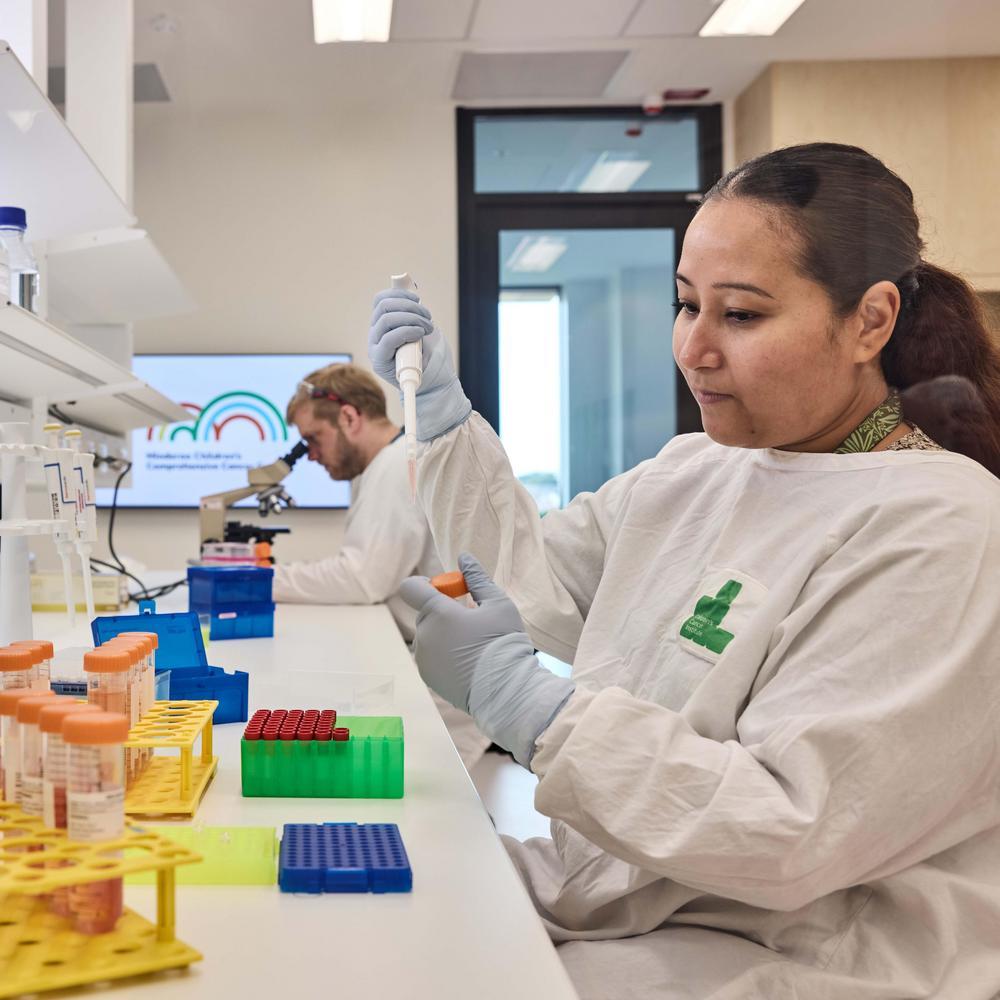
Precision medicine improves outcomes in children with deadly...
ACRF and Children’s Cancer Institute launch the ASpIRe Pro...
Zebrafish models offer fast and effective guidance for perso...
It's not just about the 'type' of cancer anymore
Get in touch
Do you have a question about our work? For any enquiries please don’t hesitate to contact us.


