

Children’s Cancer Institute research into promising new leukaemia treatments was presented earlier this year at the American Association for Cancer Research (AACR) Annual Meeting 2026 — the world's largest and most prestigious cancer research conference.
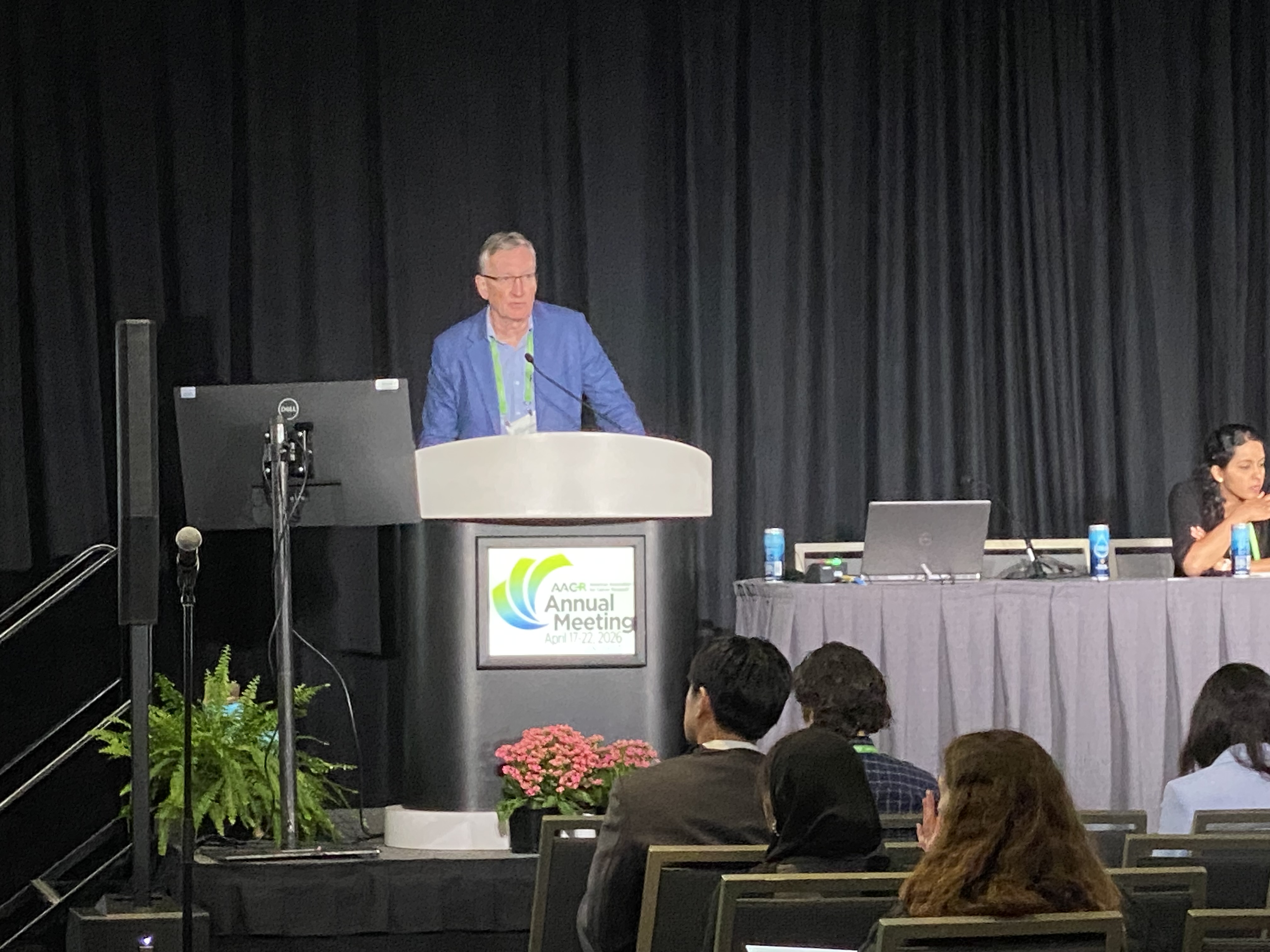
Professor Richard Lock, Head of the Leukaemia Biology Group at the Institute, presented results from his group’s testing of a new targeted therapeutic, REM-422, against T-cell acute lymphoblastic leukaemia (T-ALL), an aggressive leukaemia requiring intensive treatment.
The testing was carried out in specialised models known as ‘patient-derived xenografts’ or PDXs — mice growing leukaemia cells taken directly from patients — widely regarded as the most clinically relevant laboratory models in which to test novel drugs.
‘T-ALL is notoriously difficult to treat, especially at relapse,’ said Professor Lock. ‘When we tested REM-422 as part of the US National Cancer Institute-funded PIVOT [Pediatric Preclinical In Vivo Testing Program] consortium, we were very encouraged to see potent single-agent activity against a large panel of paediatric T-ALL PDXs. We now intend to expand our preclinical testing to additional PDX models.’
‘REM-422, which targets a leukaemia-driving protein called MYB, is currently in clinical trials for other malignancies. Remix Therapeutics, the biotechnology company that developed REM-422, is now considering a clinical trial in relapsed/refractory T-ALL, which would be wonderful,’ he added.
Children’s Cancer Institute also played an important role in the testing of another new drug featured at the AACR meeting, AMX-883, developed by Amphista Therapeutics as a potential treatment for acute myeloid leukaemia (AML), another difficult-to-treat leukaemia.
AMX-883 — a new-generation drug known as a “targeted protein degrader” — selectively targets and destroys the BRD9 protein, which is known to promote tumour progression in several different cancers, including AML.
‘Our role was to carry out preclinical efficacy studies on AMX-883 in our AML PDX models,’ explained Professor Lock. ‘We found that it showed impressive single-agent activity, effectively blocking tumour growth.’
‘We are currently planning additional preclinical testing, particularly of AMX-883 in combination with standard-of-care anti-leukaemic drugs. Excitingly, Amphista has plans to progress AMX-883 into clinical trials later this year, and we await those results with great interest.’