
Watching them suffer like that …it’s the cruellest thing
- Sallie, Harvey’s mum
When 5-year-old Harvey began having unexplained fevers, his mum was shocked to discover her little boy had cancer. Life would never be the same again.
Pre-diagnosis
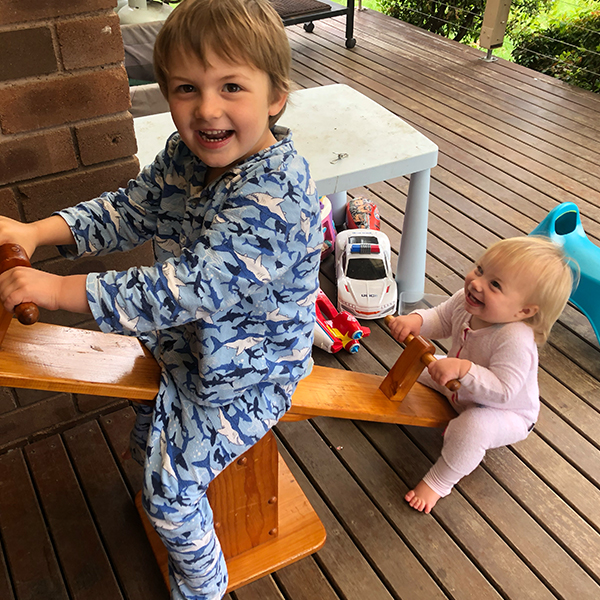
Five-year-old Harvey was a very active, fun-loving little boy who loved being by the water and doing outdoor activities like camping and fishing.
‘He loved being cheeky; he was the funnest kid,’ reminisces Sallie, Harvey’s mum. ‘He just loved life.’
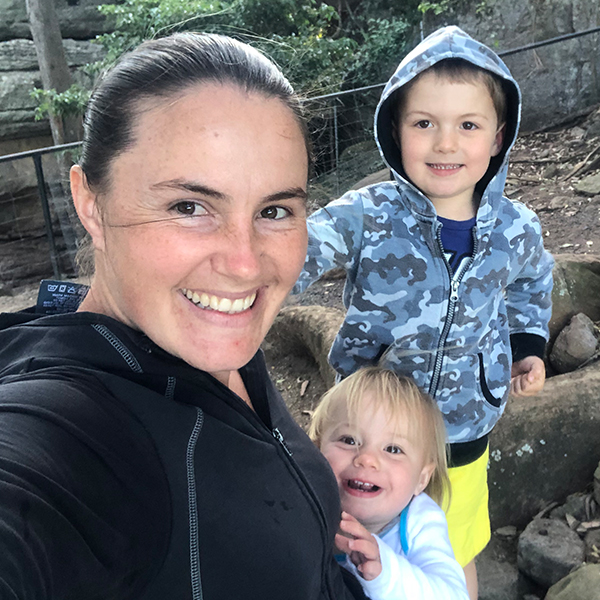
‘He was also a great big brother. He said to me the other day that he wants to start a baby orphanage because he loves babies so much!’
Symptoms
One morning, Harvey woke up and was unable to walk. Sallie took him to the Emergency Department of her nearest hospital where he was given high-dose Panadol. Much to her amazement and relief, within a short time he was up and walking again.
However, Harvey kept getting unexplained fevers.
‘We’d seen the doctor a few times and were trying to figure out what it was,’ Sallie says. ‘Then one day we were at Woolies and Harvey said he wanted to get into the trolley. I said no, you can walk. And he said, but it hurts when I breathe.’
Sallie noticed a few bruises on Harvey’s body. When she then saw what she thought was a rash (petechiae), she again took him to the doctor, who suggested she take him to the hospital for blood tests.
Diagnosis
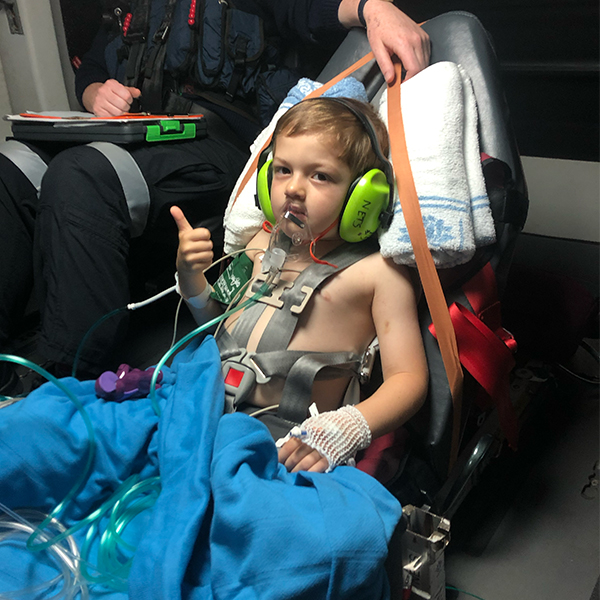
At the hospital, Sallie says they took Harvey straight through and into a bed.
‘Everything went kind of blurry,’ she says. ‘I don’t remember anything much until they took me into a side room.’ Here, a doctor came in, sat her down, and told her he was sorry.
‘He told me it’s looking like leukaemia or lymphoma, and they’d be able to tell me more in Sydney. They were sending us in a helicopter.’
Amelia, who was only one and still being breastfed at the time, was left with family and Sallie went to Sydney with Harvey.
When I was told he had cancer, I just went numb.
- Sallie, Harvey’s mum
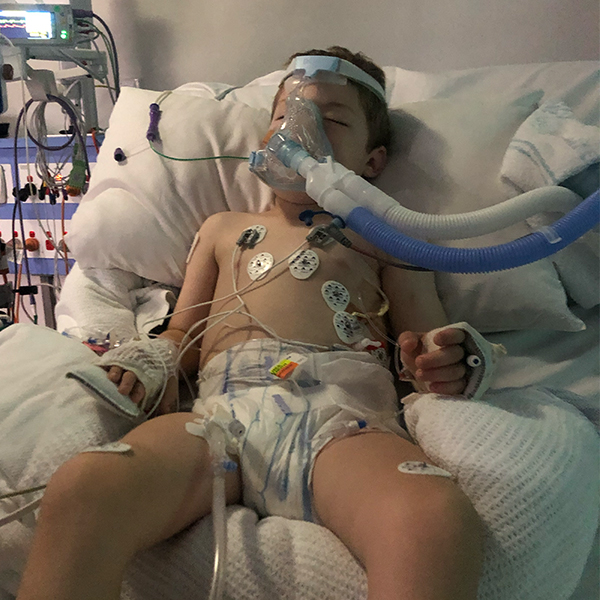
At Sydney Children’s Hospital, Harvey was found to have pleural effusion [a buildup of fluid between the lung and the chest wall]. He was given a chest drain and was put on steroids, and after a few days in the intensive care unit, was moved to the oncology ward.
‘When I was told he had cancer, I just went numb,’ shares Sallie. ‘I went into a robot mode. I think the first words out of my mouth were, Okay, what do we do?’
‘I don’t think anything was sinking in. Someone told me he had T-cell acute lymphoblastic leukaemia, T-ALL, which of course meant nothing to me.’
Sallie had only just recently found out she was pregnant with her third child. Now, her first born was in hospital with cancer. Testing times were ahead.
Treatment
Harvey was found to have cancer cells not only in his blood and bone marrow, but also in his cerebrospinal fluid. This meant he not only needed chemotherapy, but also cranial radiation (radiation to the brain).
During treatment Harvey repeatedly got sick, significantly delaying his recovery.
‘Harvey would always have fevers,’ Sallie recalls. I don’t know why he was so sick all the time, but he was slow to recover. If a block of chemo was supposed to be three weeks, it would take him five or six weeks.’
‘I think the first time he was able to leave the hospital and come home was Easter. That was about five months in.’
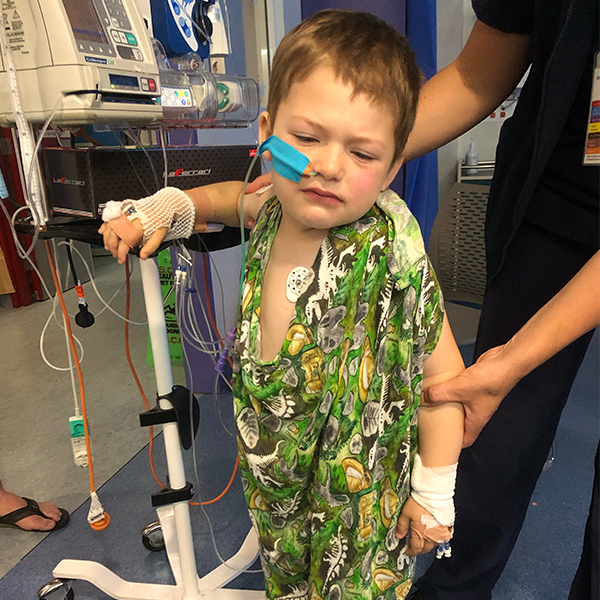
I thought they were going to kill him with all the chemo.
- Sallie, Harvey’s mum
Sallie well remembers the day she was given Harvey’s high-risk treatment protocol.
‘I’d been there long enough to know what each of the chemo’s [drugs] did to him, so I knew what he was in for, and I cried for the rest of the day. I pretty much cried for six hours straight, because I thought they were going to kill him with all the chemo they were giving him.’
Throughout Harvey’s treatment, Sallie was staying up in Sydney and could only see her young daughter, Amelia, on weekends.
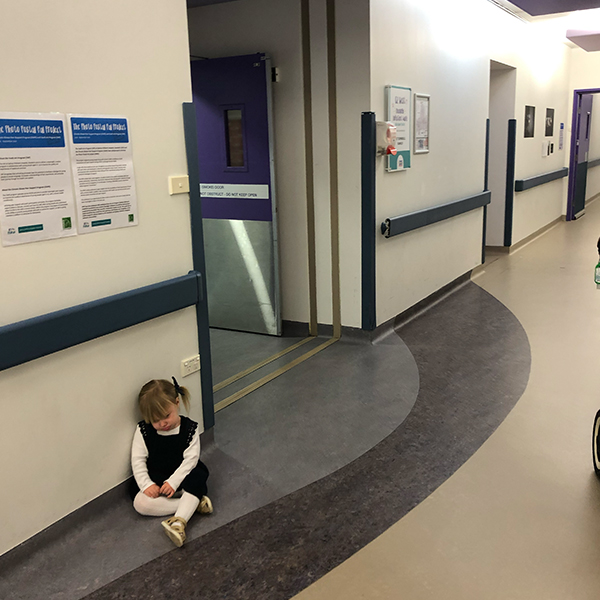
‘That was really hard, especially during COVID when you couldn’t have siblings on the ward. I think it was really hard for her. I’ve got this picture of her sitting outside the ward and she’s so sad; she’s got her bottom lip out.’
It was also around this time that Sallie gave birth to her second son, Archie, adding yet another level of challenge.
Relapse
In November 2022, two years after treatment began, Harvey rang the end-of-treatment bell at the hospital. As the months went by, life slowly regained a bit of normality.
‘When we went back home, Harvey was good,’ says Sallie. ‘He'd still get fevers, he would still get sick, but he would bounce back quickly.’
Around Christmas 2023, Harvey began to get very tired and appeared to have some facial swelling.
‘The fatigue was an alarm bell for me and I wanted to get some bloods done,’ recalls Sallie. ‘We saw our paediatrician, and he just took one look at him and was like, I’m calling Sydney because I think he needs to be seen.’
Back at Sydney Children’s Hospital, a CT scan revealed that Harvey had a small lump in his head near his pituitary gland. ‘I thought it was a brain tumour, but it was a chloroma (myeloid sarcoma), a lump of cancer,’ Sallie explains.

Watching them suffer like that …it’s the cruellest thing
- Sallie, Harvey’s mum
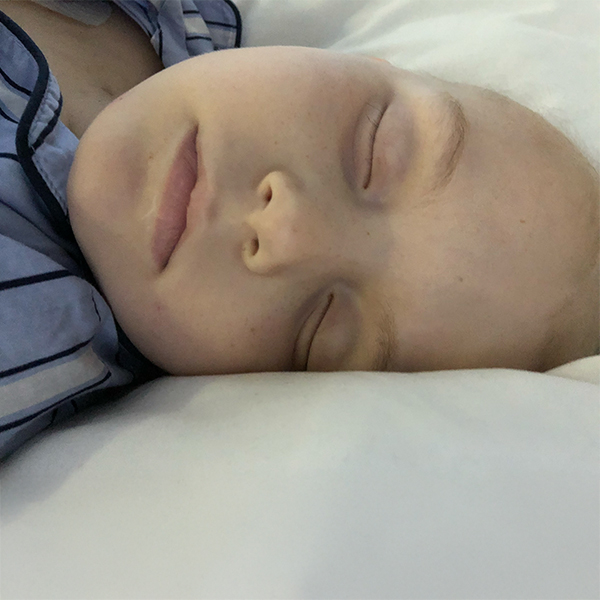
Harvey had relapsed and would now need a bone marrow transplant.
Sallie says all the chemotherapy and radiation therapy needed to prepare Harvey for the transplant had a big effect on him.
‘The last radiation day, they put in the nose tube and that was the day he changed. When you look at the photos, he's gone from happy Harvey to depressed Harvey.’
Unfortunately, neither of Harvey’s siblings were a donor match and no suitable donor was available in Australia. Thankfully, though, the world registry had a match for Harvey and he was able to receive a transplant on Archie’s 3rd birthday.
During the transplant procedure, Harvey had a rare anaphylactic reaction to DSMO, a preservative in the transplanted stem cells. ‘The oncology team dealt with it so well,’ recalls Sallie. ‘Even during the chaos, I felt he was safe.’
Side effects
Harvey suffered many side effects during his cancer treatment, including life-threatening complications.
Following his transplant, he developed transplant-associated thrombotic microangiopathy, a potentially fatal complication leading to blood clots, organ damage (especially the kidneys), anaemia, and low platelet counts.
‘He needed platelets every day for weeks,’ Sallie shares.
Other treatment-related side effects included severe abdominal pain, neurological issues, breathing difficulties, viral infections and extreme skin sensitivity.
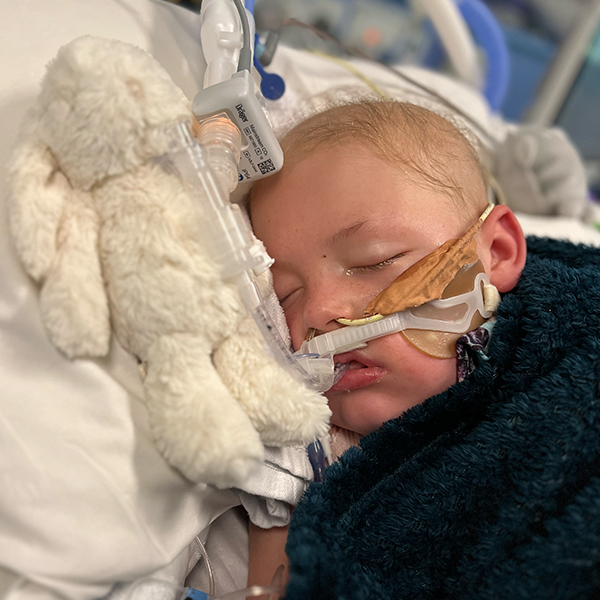
He couldn't walk; he couldn't do anything.
- Sallie, Harvey’s mum
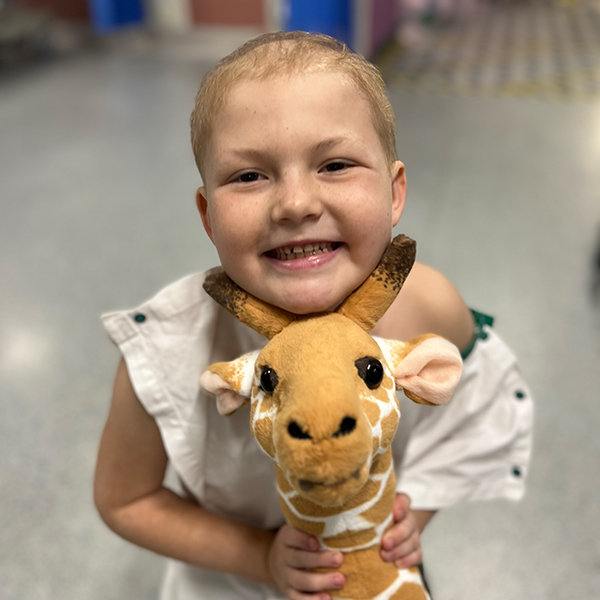
Eventually, Harvey got so sick that he needed to be admitted to the intensive care unit.
‘By the time he got to ICU, he was in such a bad way,‘ Sallie shares. ‘He was writhing around in pain. He couldn't walk; he couldn't do anything.
‘He spent his 9th birthday in hospital, too sick to open his presents for weeks.’
After a full month in ICU, Harvey slowly began to recover, and eventually was sent home.
Reflections
Sallie says they are not yet at a point where they can celebrate, describing Harvey as underweight, anxious, and ‘broken’.
‘He's been through a lot. The fact that he's still here is like a miracle.’
“I will always be so appreciative of Harvey’s incredible oncologist Dr Richard Mitchell at Sydney Children's Hospital. He genuinely cares for patients and families. We won the oncologist lottery with him! It’s not just about treating the child’s cancer, you need to care about everything else too.”
‘Watching what Harvey went through …I have to tell people we need research; we need to do better. Watching them suffer like that is the cruelest thing.’
‘If we can get more researchers finding out things, at the end of the day, we're going to get there quicker. I don't want to see another kid die, or suffer like my kid has.’
Share your story
Have you been touched by childhood cancer and would like to share your story? Please get in touch today.


