
Everything came crashing down.
- Amy, Emilia's Mum
Emilia was a life-loving toddler when a trip to hospital changed her life, and that of her family, in a heartbeat.
Life Before Cancer
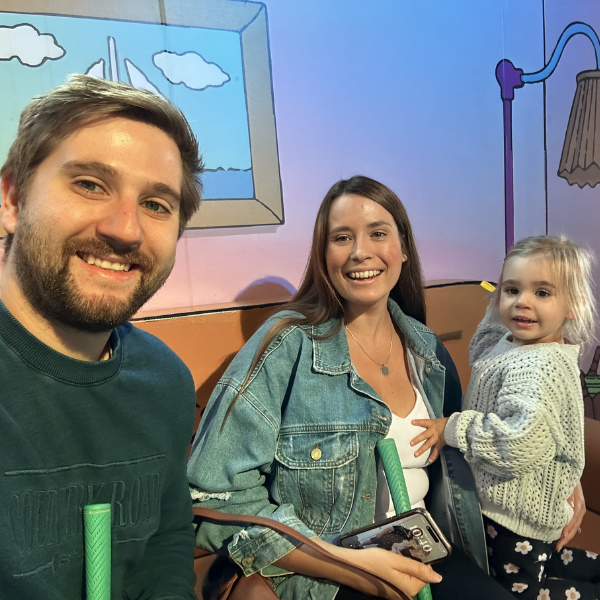
From the moment she could walk, Emilia filled every room with colour and noise — in the best possible way.
She loved arts and craft and dress-ups. She also adored being outdoors, and when she wasn't painting or colouring, she was scooting through parks on her scooter or enjoying a weekend adventure in country Victoria with her parents, Amy and Mat.
"If you think of dress-ups, princesses, fairies, rainbows, unicorns, sunshine - that's Emilia," says Amy. "She was very outgoing, very creative, very energetic. Just wanting to be involved with anything and everything."
Symptoms
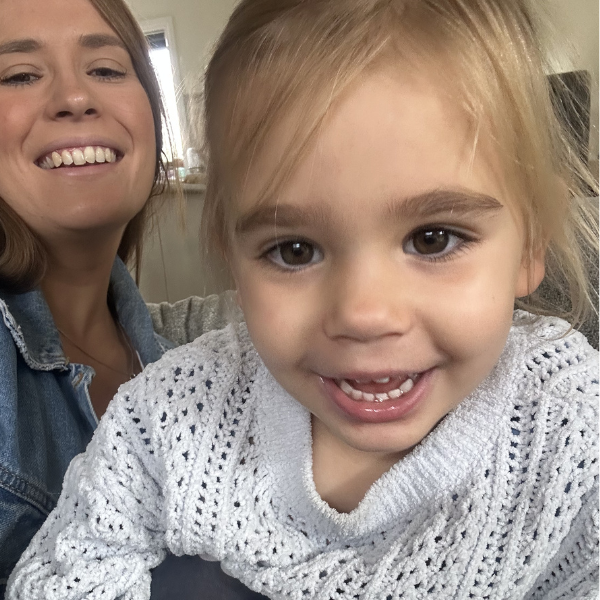
Emilia was only two when Amy started maternity leave — a precious stretch of time together before the arrival of a new baby. Then, out of nowhere, things began to shift.
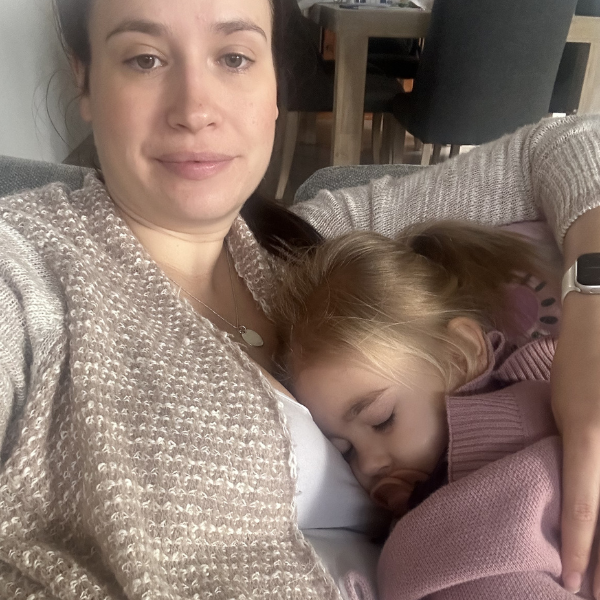
Emilia had seemed a little off on the Sunday. On the Monday, Amy took her to story time at the Library, and Emilia kept asking to be carried, telling her mum she was really tired. That afternoon, Emilia's temperature climbed to 39 degrees. Panadol and Nurofen brought it down temporarily, only for it to rise again. The next day, she developed a cough. Amy took her to the GP, who prescribed antibiotics
She kept saying she was really tired. It was a bit weird, but I didn’t think anything of it at the time.
- Amy, Emilia's Mum
A few days into the antibiotics, Mat was washing Emilia when he noticed a swollen lymph node at her groin. Amy took her back to the doctor the following afternoon.
This time, the GP looked at Emilia carefully and asked, "Does she look pale to you?" Amy wasn't sure. Then, as Emilia sat on the examination bed, tiny pinprick red dots - petechiae - began appearing on her arm.
"That flagged for me straight away," Amy says. "This is not normal. This is not right." Amy's mind went immediately to meningitis. The GP suggested they go to Emergency without delay.
At the hospital
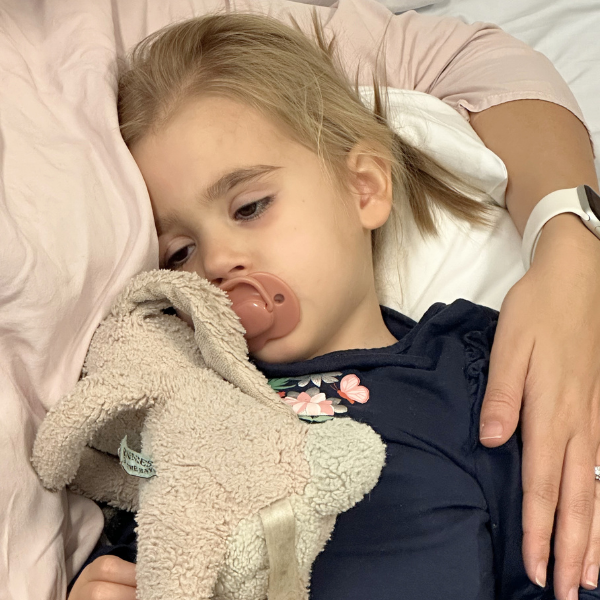
At the local hospital, Amy and Mat asked for blood tests to be done.
Mat headed home to feed the animals and grab some dinner. The moment he left, a doctor entered the cubicle, looked at Amy ― heavily pregnant and alone ― and asked, "Where's your husband?"
The doctor sat with them and waited for Mat to return before saying anything further. When Mat arrived, they were told Emilia’s results were very concerning, and they believed it might be leukaemia. She needed to go to Monash Children's Hospital immediately.
Diagnosis
At Monash, Matt and Amy were told Emilia needed an urgent blood transfusion. Amy held her daughter through the night as the transfusion ran. At some point in those quiet hours, Emilia reached up to her mum and said, "Mummy, don't cry. We're okay."
Then the doctor who would become Emilia's treating oncologist arrived with his team. He explained that they were almost certain it was leukaemia, and spoke the words Amy would carry for a long time afterwards: "This is not a death sentence."
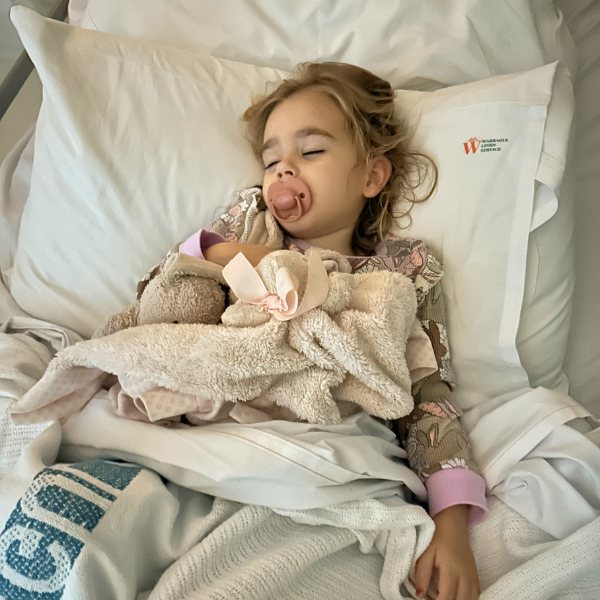
Mummy, don't cry. We're okay.
- Emilia
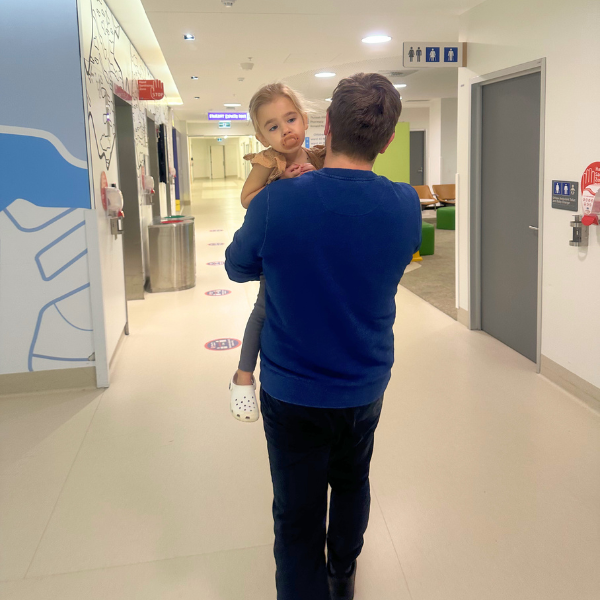
A bone marrow aspirate and central line insertion were scheduled for that morning. Emilia would need to go under general anaesthetic but Amy, because of her pregnancy, couldn't go in with her.
"I remember her being rolled out and screaming ’Mummy, I need you to come with me.' I fell to the ground. I just remember falling in an absolute heap."
The official diagnosis came a day later: B-cell acute lymphoblastic leukaemia. That same afternoon, chemotherapy began. In less than 48 hours, their world had changed completely.
Treatment begins
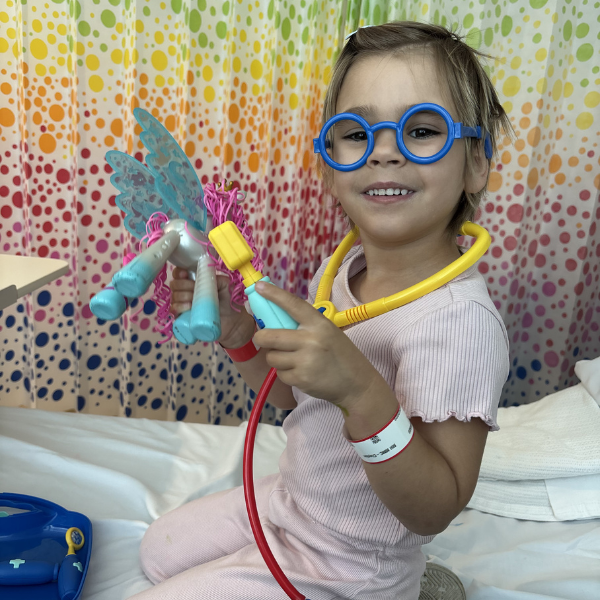
Induction therapy began well. Emilia, at two years old, was remarkably compliant. She had an extraordinarily high pain threshold and accepted procedures with quiet cooperation, trusting the people around her completely.
Mat and Amy worked hard to keep her days full. Arts and crafts remained her constant companion, while family and friends delivered gifts and supplies to the ward. Despite the steroids causing fluid retention and mood swings, Emilia managed the first treatment block with surprising resilience.
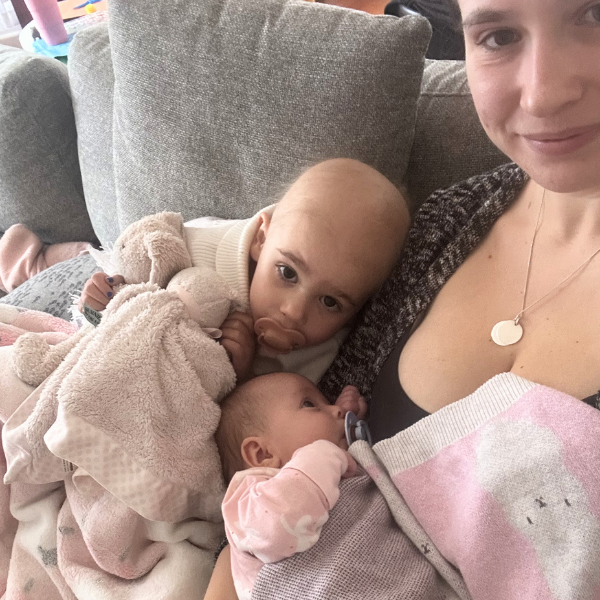
She had only been home a few days ― during which time Amy went into hospital to give birth to her second daughter, Maeve ― when she developed a serious complication. An abscess had formed became infected, leading to severe sepsis.
She was readmitted to hospital and remained there for nearly a month while the infection was brought under control.
The infection had a significant consequence: Emilia missed two chemotherapy doses, and when her day 29 bone marrow aspirate came back MRD positive ― meaning that leukaemia cells were still present in her body ― her risk classification was changed from standard to high.
She would now need more intensive treatment.
Side effects
During the consolidation phase of therapy, Emilia reacted to PEG-asparaginase, a drug commonly used in leukaemia treatment. Amy was sitting on the bed holding her daughter when she felt Emilia's body become intensely hot, and called out for the infusion to stop.
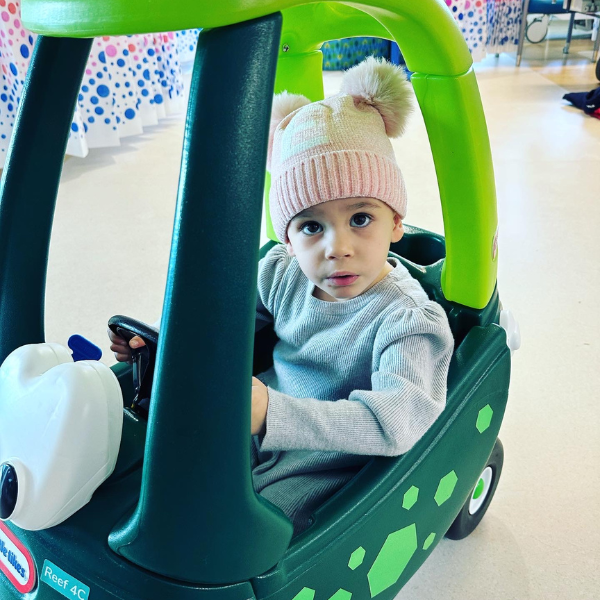
From that point on, Emilia was switched to a different formulation. Unfortunately, this meant that injections had to be administered into the thigh every second day, which Emilia found very painful.
"She hated it," Amy says. "She has an extraordinary pain threshold for almost everything. But the needle going into the thigh …she would cry. Having to hold her down for that was really, really hard for Mat and me."
Having to hold her down for that was really, really hard.
- Amy, Emilia's Mum
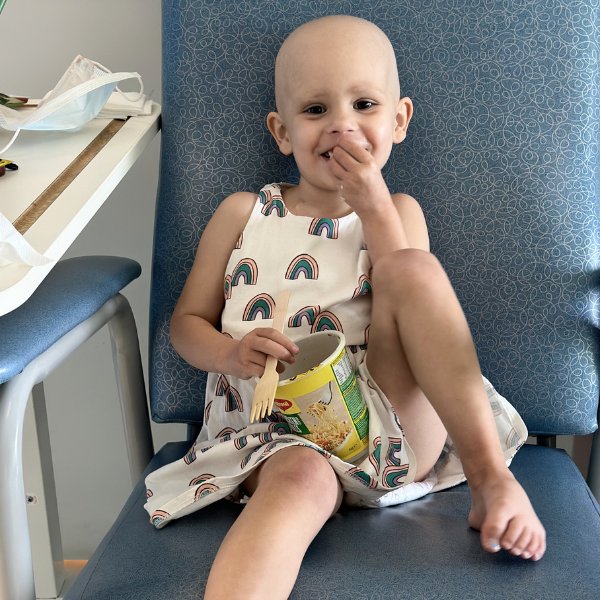
Emilia also developed a second infection during consolidation, though this time it was caught early and resolved more quickly. A small but meaningful adjustment ― no more baths, showers only ― helped prevent further episodes.
The steroid component of treatment brought its own challenges. During induction, dexamethasone caused Emilia's mood and behaviour to change significantly. Later, she was moved to prednisone instead - a quieter option for her, and one her parents counted as a genuine relief.
More than two years after going into hospital, Emilia finally completed treatment.
Today
At the time of writing, Emilia is five years old and in Prep. She is exactly who she always was: outgoing, creative, animal-loving, and fond of a good dress-up.
At home, she can sometimes become very angry ― a response Amy understands as the body's way of carrying what the mind couldn't fully process at two years old. Art has become more than a hobby, and Amy and Mat are considering art therapy as something that might help Emilia express what she's been through.
Emilia knows she was very sick. She knows medicine made her better, and made her lose her hair. The rest, for now, is her parents' story to hold
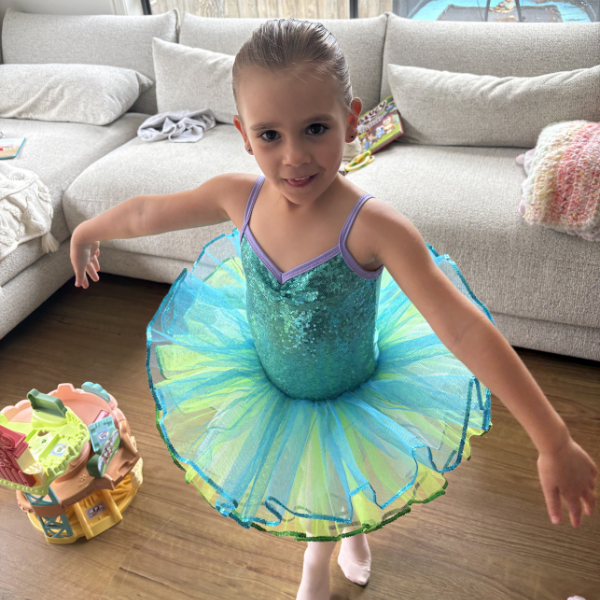
I call her my hero. To see her go through what she had to go through …she's just amazing.
- Amy, Emilia's Mum
Reflections
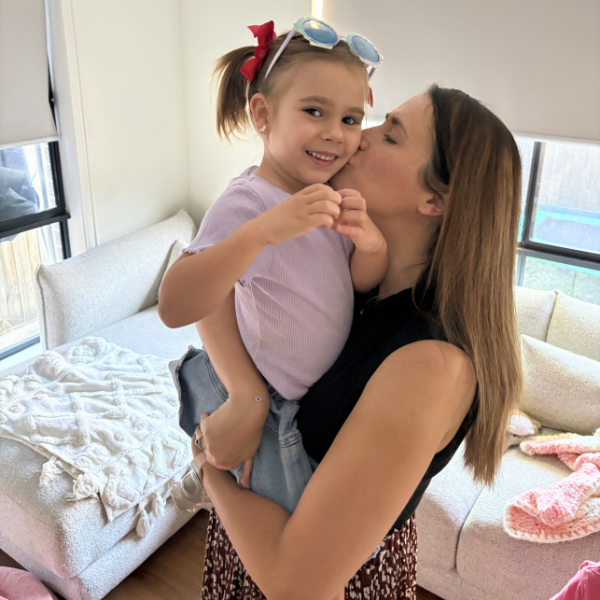
Amy speaks about gratitude the way some people speak about a practice ― something she returns to daily. Being confronted with her child's mortality changed how she moves through the world. She doesn't sweat the small things. She notices the sunshine.
Her experience has also impressed upon her the significance of the work done by Children’s Cancer Institute.
No family should have to go through what we have gone through.
- Amy, Emilia's Mum
"I'm eternally grateful for everything they (Childrens Cancer Institute) do,” she says. “Eternally grateful for people pushing forward to achieve better outcomes, better treatment plans. Childhood cancer is horrific, so if there's anything we can do to make treatment better, with less side effects, that's a gift in itself.”
"No child should ever be diagnosed with cancer. But I am very aware that because of research and advancements in treatment, Emilia was, and has been, lucky. And not every child has that."
How you can help

Give a gift
By giving a gift today, you can make a difference to the lives of children with cancer.

Fundraising and events
Get involved in one of our events or create your own to help find better, safer treatments for children with cancer.

Partnerships
Join our diverse community of businesses, philanthropists and gamechangers, determined to help cure childhood cancer.
Share your story
Have you been touched by childhood cancer and would like to share your story? Please get in touch today.


