
If we can improve those survival rates, then that's the most powerful thing a parent can have.
- Jake, Townes' Dad
Townes was a very active little boy, always running around or riding his bike. Then a broken leg that wouldn’t heal led to a shocking diagnosis.
Life before cancer
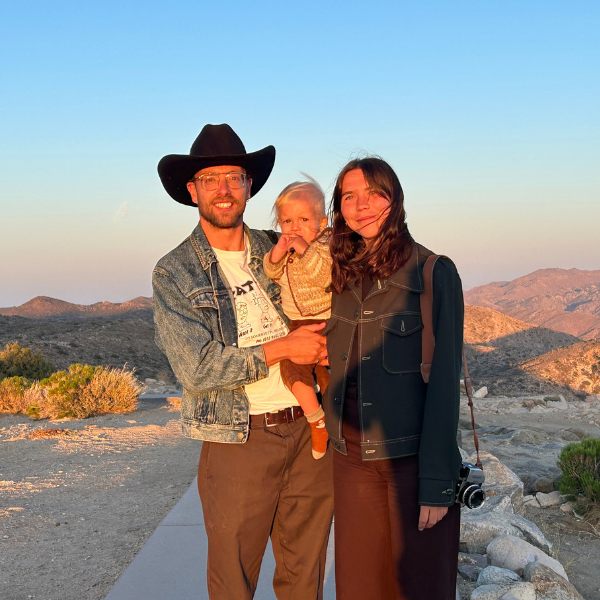
Townes was named after the country musician, Townes Van Zandt. His dad, Jake, was listening to him a lot and when they fell pregnant it just clicked.
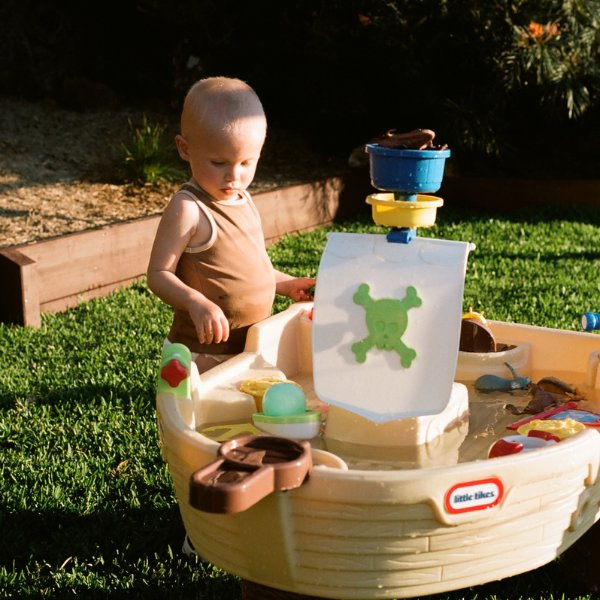
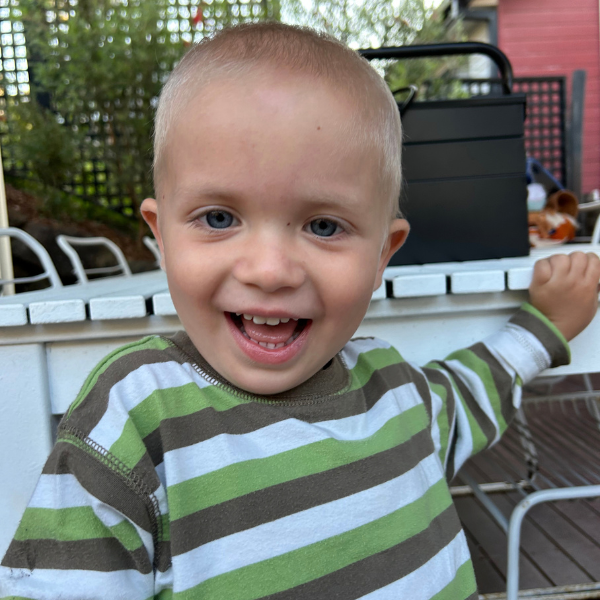
“He was just your classic little boy,” says Ainsley, Townes’ mum. “He loved trucks, he loved cars, he loved anything with wheels. He was burning around on a bike before he could walk. He was such a happy, cheeky boy.”
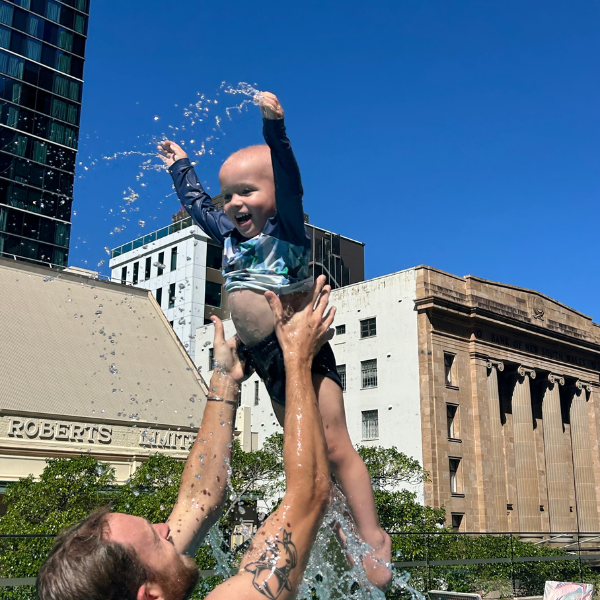
A water boy, Townes and the family spent as much time as possible at the beach near their home in northern New South Wales. He also loved being out and about with his dad.
“Because I was working from home as a freelancer, I’d go up to the skate park and take him with me. He’d just burn around on his bike the whole time while we skated” Jake says. “He’d have the best time.”
Symptoms
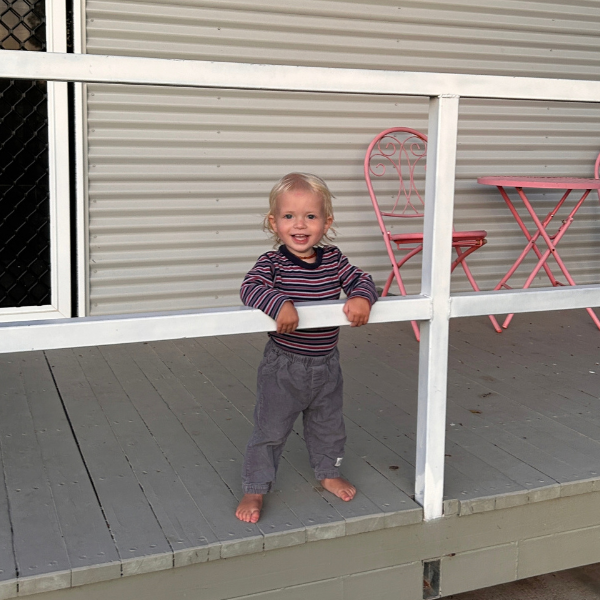
Just after Townes turned one, he started daycare, and the illnesses came back-to-back. He wasn’t gaining weight, his appetite was almost non-existent, and his energy was low. Ainsley was worried.
“People questioned my reasoning for being stressed about it,” she says. “Everyone’s very quick to be like, yeah, that’s just what it’s like. But I had a feeling that something was off.”
Jake wasn’t as sure. “I was a bit more like, no, it’s fine, it’s nothing. Now in retrospect, I’m like, wow, that mother’s intuition is very, very strong.”
Then Townes fell about thirty centimetres off a deck onto grass and broke his leg in two places. He was told he’d be walking again in three weeks. But eight weeks later, he still wasn’t.
I’m sitting in the fracture clinic looking at him thinking, there’s got to be a reason. Something is up here.
- Ainsley, Townes' Mum
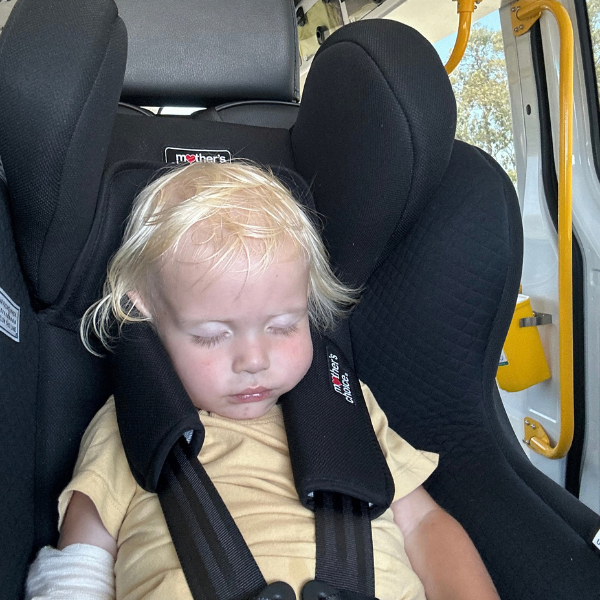
Jake and Ainsley had taken Townes to the doctor several times. When daycare rang to say Townes was lethargic and feverish, Jake and Ainsley made a decision.
“We said, let’s go down to ED [the Emergency Department] and demand rigorous testing — blood tests, whatever it takes,” Jake says. “We’re not walking away without some sort of answer.”
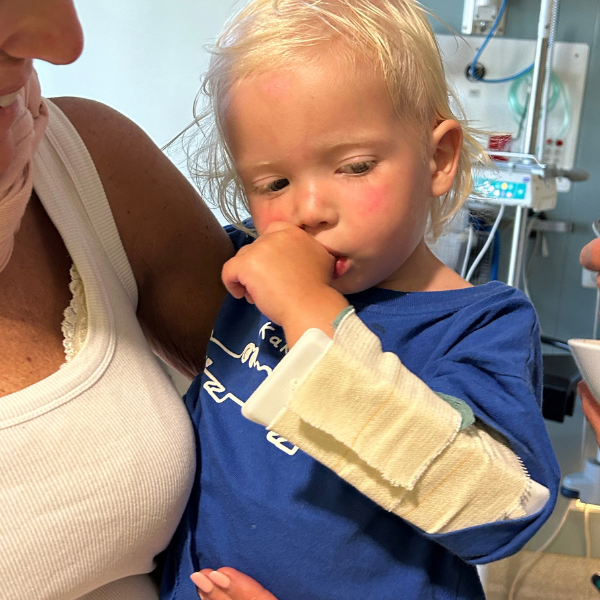
Diagnosis
The doctor on shift that evening examined Townes carefully and ordered imaging. She then gently prepared them for what the results might show.
“She was amazing,” Ainsley says. “She primed us. She told us that, worst case, this is cancer. Somebody's going to come in, and maybe you'll hear the C word. And I was like, oh my God, this is going to be cancer. That’s exactly what this is.”
The scans showed a large mass on Townes’ liver. He was transferred to Queensland Children’s Hospital in Brisbane, and ten days later a biopsy confirmed stage 4 hepatoblastoma — a 9 cm tumour was taking up most of his liver, with small spots on his lungs.
I did not sleep that night. My brain was ticking a million miles an hour. There’s an aspect of it where you start to grieve then.
- Ainsley, Townes' Mum
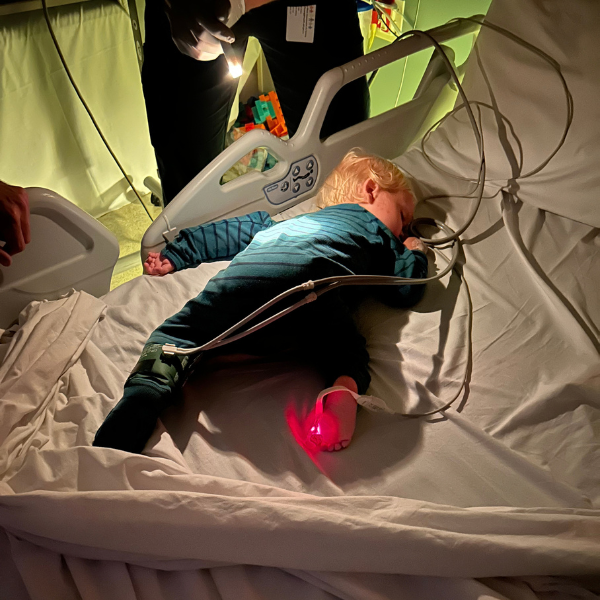
That first night, they sat with the doctor and a box of tissues and had a big cry together. Then Jake drove home to pack. “I asked how many nights I should pack for,” he says. “He didn’t know how to answer it. He said, just start with a week.”
In among the mix of emotions, there was relief. “We’d been banging our heads against the wall for so long, and then we finally got the validation that no, we were right,” Jake says. “You put your armour on. You go straight into fight mode.”
Treatment Begins
Townes started chemotherapy two weeks after diagnosis. Every week his parents watched his AFP (alpha-fetoprotein), a blood marker that rose and fell with the cancer. It had started in the hundreds of thousands.
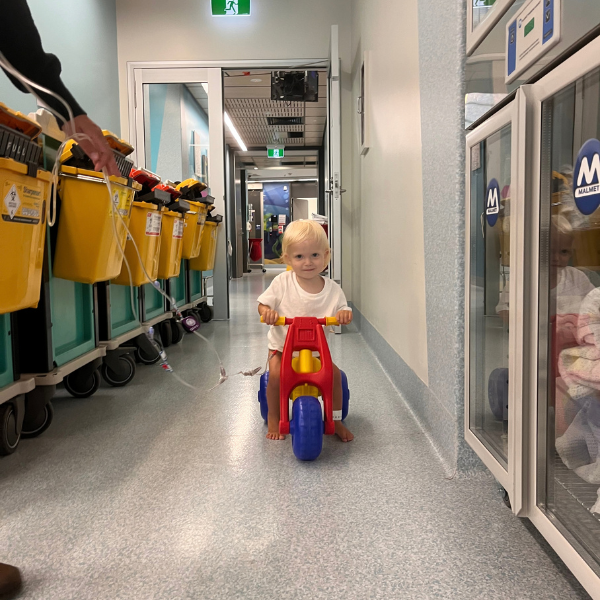
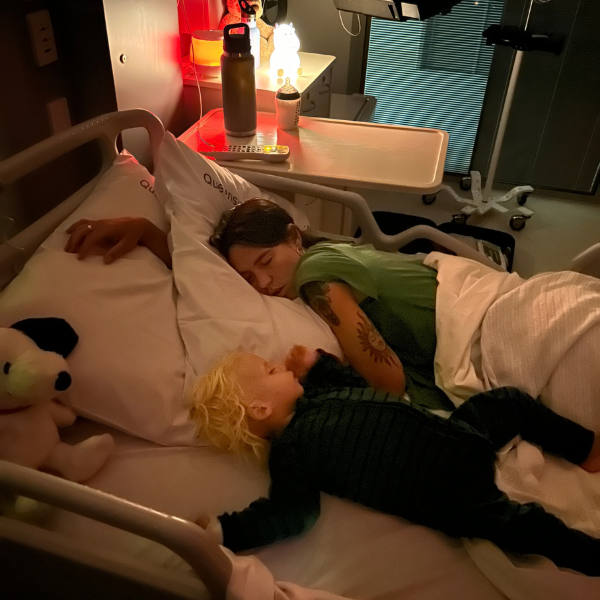
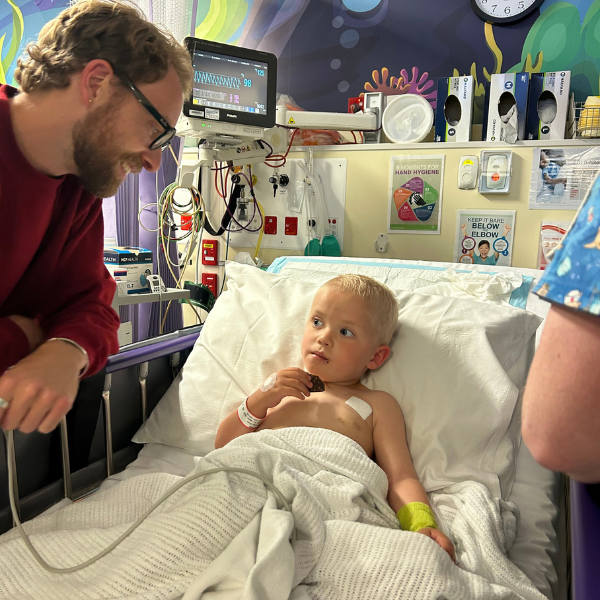
The chemotherapy worked, and the number dropped fast. On the ward around him, other children were often too unwell to get out of bed. Townes never slowed down.
“That was never Townes’ experience, which makes you feel a bit imposterous,” Ainsley shares. “I could see how unwell all the other kids were. You’re like, he is meant to be here, we promise”
I have pictures of him riding his bike around while he’s getting chemo. He was always running up and down the ward screaming.
- Ainsley, Townes' Mum
Eventually the chemotherapy began affecting Townes’ hearing, and his team made the call to switch him to a gentler drug.
On joining the Zero Childhood Cancer Program (ZERO), a sample from his tumour was sent to Children’s Cancer Institute for analysis. Genomic testing confirmed his cancer was spontaneous rather than inherited, and that the treatment plan he was already on was the best available option.
“That’s amazing to know as a parent,” Ainsley says. “Okay, we’re on the right path.”
Surgery
The plan for Townes’ treatment had originally been a liver transplant. But after three rounds of chemotherapy, the surgeon saw clear margins on the scans and thought he could remove the affected part of the liver instead.
Townes went into surgery on 19 April 2024. However, partway through, Jake and Ainsley were called into a small room with the surgical team and their social worker. The surgeon had found what looked like cancer throughout Townes’ abdomen, and hadn’t gone ahead.
“He told us ‘I haven't done the resection; I don't see a point, there's just too much there’ — basically an end-of-life chat,” Ainsley says.
He sent the biopsies away anyway. When the results came back, it turned out that the cancer was all dead, killed off by the chemotherapy. Surgery would be going ahead the next day.
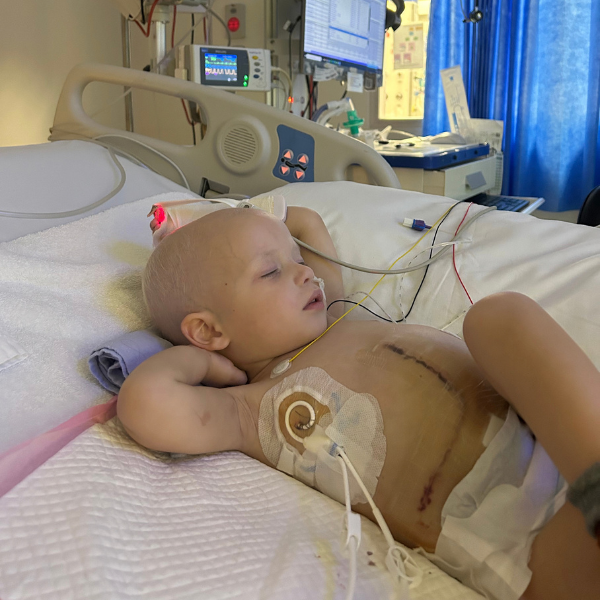
“It was a huge success,” says Jake. “Everything went super well and the surgeon was super happy with it, which was great.”
The highs and the lows
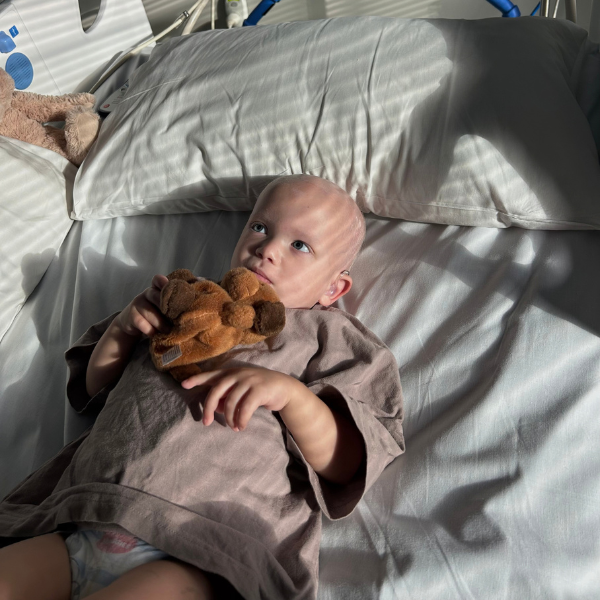
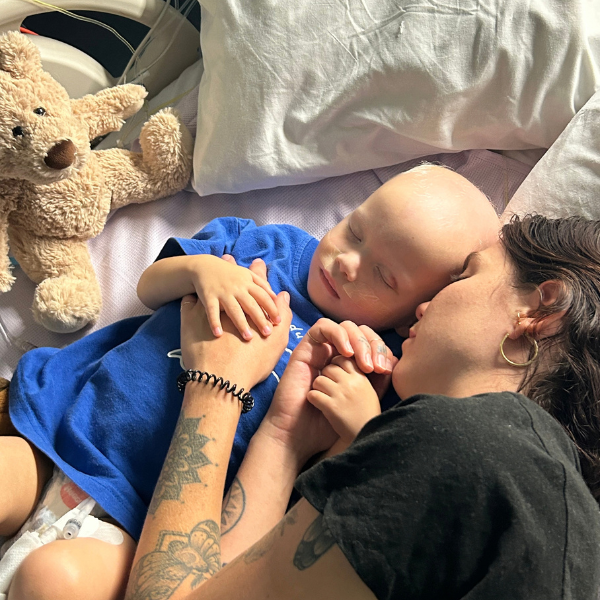
Townes had a nasogastric tube fitted, but his stomach wasn’t emptying properly, his belly swelled up and he began vomiting in the intensive care unit (ICU). He went days without nutrition and grew skeletal. His feeding tube was repositioned while he was awake — an hour of it, with both parents in the room — and he then had to endure a further procedure to fix the blockage.
“This was honestly our hardest time in the whole experience,” Ainsley says.
Things turned from bad to worse when Townes reacted badly to morphine. Every time his eyes closed he jolted awake, over and over, for twenty hours. Jake pushed for the morphine to be swapped for another type of pain relief. The minute it was, the jolting stopped and Townes finally slept.
There’s this dark cloud that looms over you. You know deep down that it’s really not over.
- Jake, Townes' Dad
A few weeks later, Townes was up and running again, and his AFP levels dropped to 170 — close to remission. The family moved back home in July, and in August his central line came out. For the first time, he could swim.
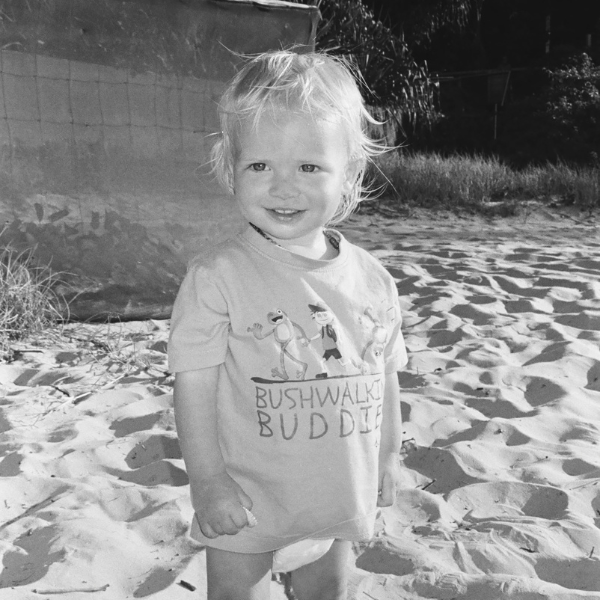
“He had a beautiful tan from being at the beach, and white blonde hair,” Ainsley recalls. “He was so happy and full of life.”
“It was very pleasant,” Jake says of that time at home. “But at the same time, there’s just this dark cloud that looms over you. You know deep down that it’s really not over.”
Out of options
In September, scans showed new lesions on Townes’ lungs. He started a relapse protocol, but the AFP doubled while he was receiving the chemotherapy. Then the number jumped to 3,000. The following week, it was 21,000.
“That was a big turning point,” Jake says. “We realised we were out of options.”
Ainsley had already begun to grieve. “I remember confiding in Jake and my friends and saying, I don’t think it’s going to be fine. And everyone would be like, it’s natural to feel that way. But I’m like, no, no — I know that it’s not.”
She stopped working and started filming small, ordinary moments — Townes playing cars in his room, sitting on the front stairs, sorting through rocks. “I have four-minute recordings of us doing nothing but chatting. That was the most present I’ve ever been in my life,” she shares.
On a weekend away by the river, Townes was irritable and Ainsley noticed he seemed to be having headaches. Scans later that week found five masses on his brain. Chemotherapy or radiation might slow the cancer down, they were told, but the outcome was inevitable.
Jake and Ainsley decided to go for quality of life, opting to take Townes home rather than subject him to more treatment.
Quality over quantity was our thing at the end of the day. I’m not going to put my child through radiation when he’s going to pass anyway.
- Ainsley, Townes' Mum
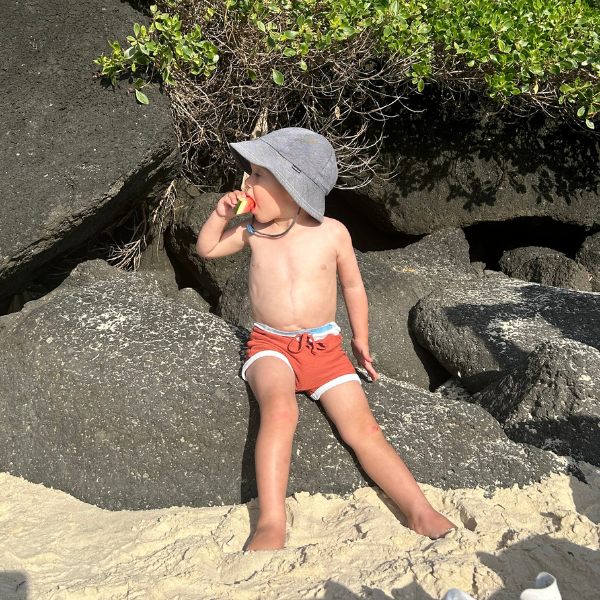
The day everyone still talks about is the day they spent together at the beach. “The water has never been so blue,” Jake says. “Everyone was saying, we’ve never seen it so beautiful.” Townes played on the sand with his best mate, and they bumped into friends all day, sharing the news, everyone hugging.
That afternoon, Townes had a seizure while going down for his nap and was taken back to the hospital.
The final chapter
On the oncology ward, staff set up a huge room so everyone who loved Townes could be there. Around twenty people came to spend time with him.
“Everyone would just take turns lying with Townes on the bed. It wasn’t solemn the whole time — it was all those familiar laughs, and I think that was so special for him to be hearing.”
On the night of 11 November, they were all eating pizza and talking when a friend noticed Townes’ breathing had changed. The room went quiet, and everyone made space for Jake and Ainsley beside him.
“I put my hand on his heart,” Ainsley says. “His breathing slowed and steadied, and then it stopped. And then I felt his heart just slowly stop too.”
He was two years old.
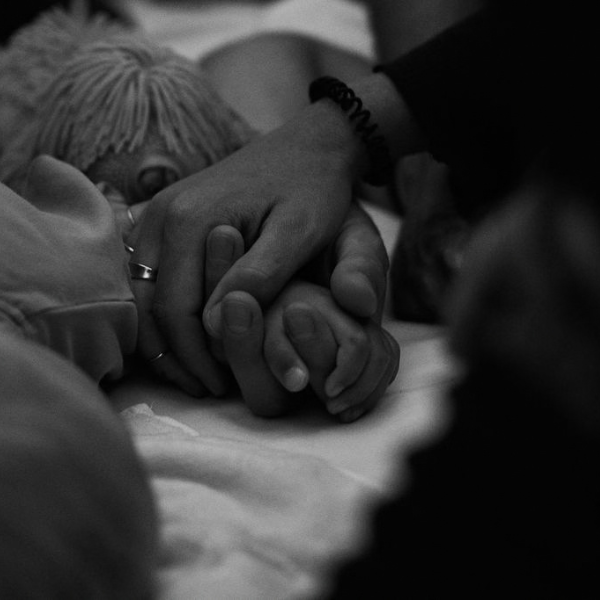
And I smiled at him, which I still find crazy. I was just so relieved that he didn’t suffer.
- Ainsley, Townes' Mum
Two weeks later they held Townes’ celebration of life at the local soccer club, where Jake had played while Townes was in treatment, and Townes had his own tiny jersey and came to watch.
At least a hundred people came, set up picnic rugs, played football and cricket, and his aunties and uncles all got up to speak.
“The turnout was just unbelievable,” Jake says. “You could see how far his story really reached.”
Reflections
Ainsley and Jake say they’ll always want people to say their son’s name. Jake has a tattoo for Townes on his arm, and Ainsley is getting one on her chest, right where people can see it.
“Someone said to me recently, I don’t want to bring that up if it’s traumatic,” Jake says. “It’s quite the opposite. You want to talk about it.”
“Why are we so closed off when it comes to loved ones we’ve lost?” Jake says. “We want his memory to be framed brightly and warmly. What he showed me was a really deep love that I’d never experienced before.”
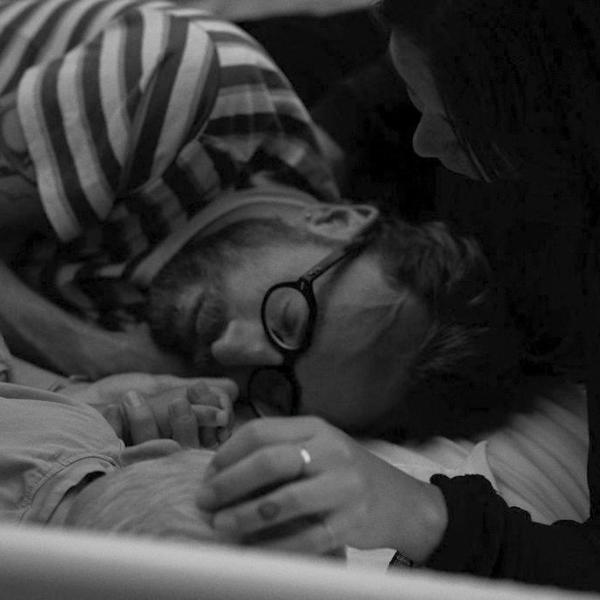
That’s how you hold someone’s legacy — talking about them, keeping them alive. Otherwise you don’t hear their name anymore.
- Ainsley, Townes' Mum
Ainsley wants other parents to trust themselves, too. “Gently push if you truly believe something’s wrong. Don’t be afraid to speak up or question doctors. There’s so much power in that.”
Asked about childhood cancer research, Ainsley says it is so important to parents.
“Childhood cancer used to be a death sentence. Now we have better survival rates than ever before. It’s improving, but we can’t do that without research continuing.”
“If we can improve those survival rates, then that's the most powerful thing a parent can have,” Jake says.
How you can help

Give a gift
By giving a gift today, you can make a difference to the lives of children with cancer.

Fundraising and events
Get involved in one of our events or create your own to help find better, safer treatments for children with cancer.

Partnerships
Join our diverse community of businesses, philanthropists and gamechangers, determined to help cure childhood cancer.
Share your story
Have you been touched by childhood cancer and would like to share your story? Please get in touch today.


